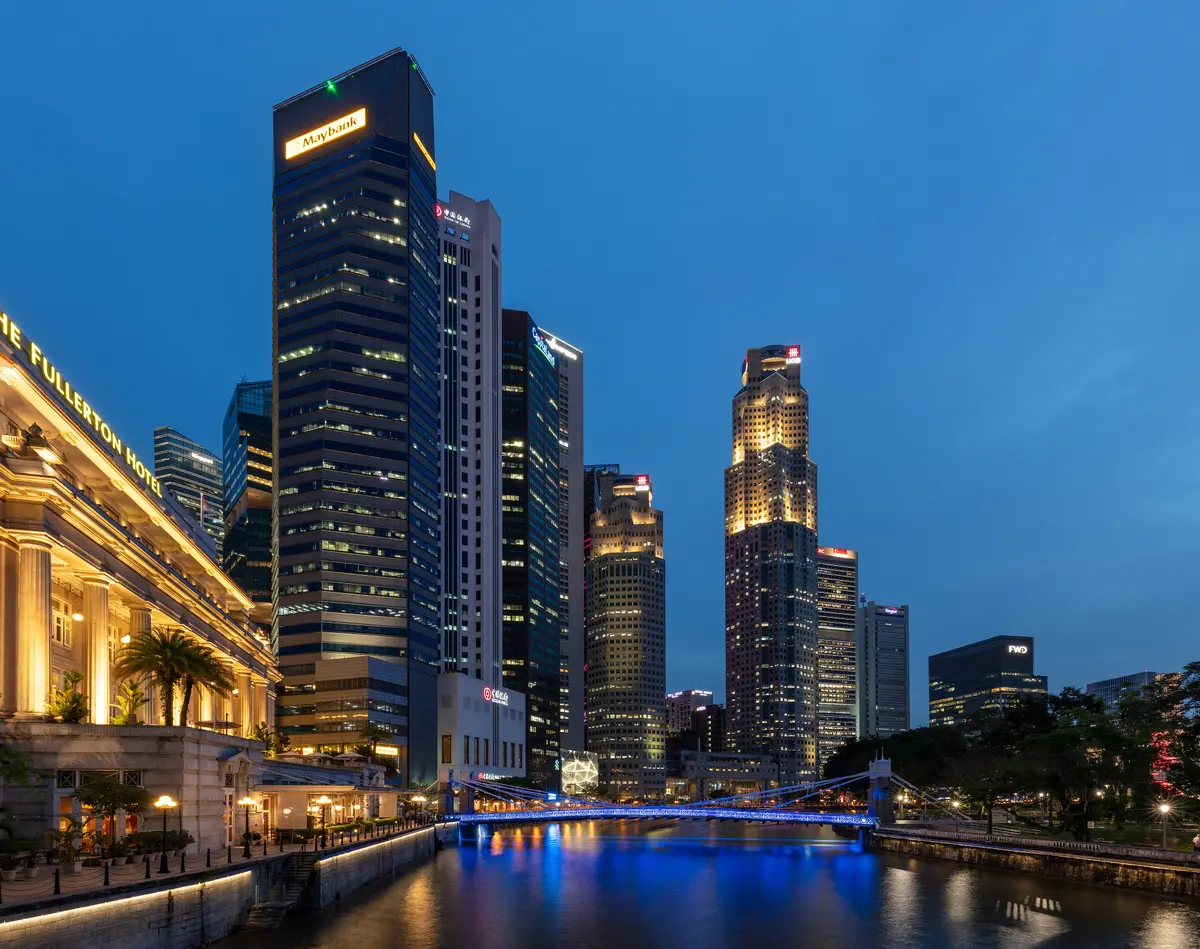
Switzerland is a leading global centre for private banking and cross-border wealth management, supervised by the Swiss Financial Market Supervisory Authority (FINMA). It was an early mover on blockchain law, with a dedicated DLT trading facility licence and a FinTech licence for deposit-taking business models that do not lend out deposits.
Risk flagStandard
FATFNot listed
EU AML high-risk listNot listed
EU tax listNot listed
Licence regimes5
CurrencyCHF
S&P ratingAAA
Next electionOctober 2027
Not on the FATF grey or black list (plenary of 19 June 2026), not in the annex of Delegated Regulation (EU) 2016/1675 as consolidated on 29 January 2026, and not in Annex I of the EU tax list as revised in February 2026. Checked 7 October 2026.
Government and politics
Government
Federal republic (confederation) with directorial government
Federal Council (collegial head of state); President of the Swiss Confederation for 2026
Guy Parmelin · since January 2026
President of the Swiss Confederation (chairs the seven-member Federal Council)
Guy Parmelin (Swiss People's Party (SVP))
Governing parties
Swiss People's Party (SVP), Social Democratic Party (SP), FDP.The Liberals, The Centre (Die Mitte)
Last election
Federal (National Council and Council of States), 22 October 2023
Next election
Federal (National Council and Council of States), October 2027. Federal Assembly elects the President of the Confederation for 2027 each December
Legislature
Federal Assembly: National Council (200 seats) and Council of States (46 seats)
Legal system
Civil law system; limited judicial review of federal legislation
Economy and finance
Population
9.1m (2025)
GDP
USD 1tn (2025)
GDP per person
USD 115,620 (2025)
Currency
Swiss franc (CHF), floating
Central bank
Swiss National Bank
Credit rating
S&P AAA (stable) · Moody's Aaa (stable) · Fitch AAA (stable) (as of March 2026)
A high-income economy built on pharmaceuticals, precision manufacturing and commodity trading, and one of the world's largest cross-border wealth management and insurance centres.
Bank
Banking licence
Minimum capitalUSD 12m
TimelineNot published
AuthorityFINMA
Minimum capital of CHF 10 million, fully paid up, for a newly founded bank (BankV Art. 15); FINMA may grant exceptions in special cases (Art. 17)
Law
Federal Act on Banks and Savings Banks (BankA, SR 952.0), Art. 3; Banking Ordinance (BankV, SR 952.02), Art. 15
Fees
Authorisation is subject to fees under the FINMA Fees and Levies Ordinance; no fixed amount stated on the pages consulted.
Passporting
No EU passport; Switzerland is outside the EU/EEA single market for banking.
Key requirements
Only banks may accept public deposits on a professional basis (presumed if more than 20 clients)
Fully paid-up minimum capital and ongoing capital and liquidity requirements
Guarantee of irreproachable business conduct by management and qualified participants
3% of public deposits and collectively held crypto-based assets accepted, but at least CHF 300,000, fully paid up and held at all times (BankV Art. 17a)
Subject to fees under the FINMA Fees and Levies Ordinance; amount not stated on the pages consulted.
Passporting
None.
Key requirements
May accept public deposits up to CHF 100 million or crypto-based assets, provided they are neither invested nor bear interest
Must be a company limited by shares, partnership limited by shares or limited liability company with registered office and business activities in Switzerland
Clients must be told that deposits are not covered by deposit protection or privileged in bankruptcy
Sandbox: up to CHF 1 million of public deposits may be accepted without a licence if no interest-margin business is conducted
CHF 1 million for a DLT trading facility that does not provide custody, clearing or settlement services under Art. 73a para. 1 let. b or c FinMIA; CHF 5 million if it does. FINMA may require up to 50% more where justified (FinMIO Art. 13)
Law
Financial Market Infrastructure Act (FinMIA, SR 958.1), Art. 73a; Financial Market Infrastructure Ordinance (FinMIO, SR 958.11), Art. 13 and Arts. 58a ff.
Passporting
None.
Key requirements
Multilateral trading of DLT securities under non-discretionary rules
Can admit retail participants and offer central custody and settlement of DLT securities
Minimum capital under FinMIO Art. 13
Organisational, IT and risk-management requirements
Switzerland has no separate payment institution or e-money institution licence; payment and e-money style business models use the FinTech licence or, where no deposits are taken, AMLA supervision through an SRO. On 22 October 2025 the Federal Council opened a consultation (closed 6 February 2026) on amending the Financial Institutions Act to create two new licence categories: payment instrument institutions, which would replace the FinTech licence, remove the CHF 100 million deposit cap and allow issuance of a type of stablecoin, and crypto institutions. Whether a dispatch to Parliament has since been adopted was not confirmed. The Banking Ordinance figures are taken from the German text in force since 1 January 2025 because no current English consolidation was available on Fedlex; a new consolidation applicable from 1 January 2027 exists. Online casino licences (extensions of land-based casino concessions) are not covered here.
General information
About Switzerland
Natural Earth boundaries. Map is indicative.
Status
Sovereign state
Capital
Bern
Largest city
Zurich
Area
41,277 km²
Official languages
German, French, Italian, Romansh
Time zone
UTC+01:00 (UTC+02:00 in summer)
Main exports
gold
packaged medicine
vaccines
watches
financial services
insurance
Main export partners
Germany
China
United States
Italy
Turkey
Sources for the country information(7)
Country information checked 9 October 2026. Licensing data updated 7 October 2026. Information only, not legal advice; requirements change. Regulatory notice.